Which Spanish cheese to buy depending on the occasion
Not all Spanish cheeses serve the same purpose. There’s a cheese to crown an appetizer, another to give as a gift, one for an elegant cheese board and another that simply asks for bread, wine and silence. If you wonder which Spanish cheese to buy, the correct answer doesn’t start with price or fame: it starts with the occasion, the type of milk and the intensity you truly want on the table.
Spain doesn’t compete in cheeses. Spain masters the language of cheese with an extraordinary diversity of territories, livestock breeds and production methods. That’s why choosing well is not about buying “the most famous,” but about recognizing which profile fits your taste and the moment of consumption. That’s where a gourmet selection makes the difference.
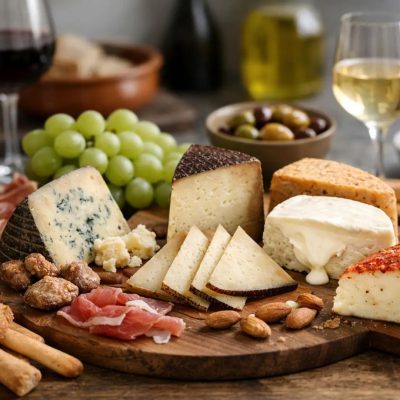
Which Spanish cheese to buy if you want a safe bet
If you want to get it right without complicating things, there are three main paths. The first is cured Manchego, probably the most recognizable Spanish cheese and one of the great ambassadors of our premium cuisine. It has firmness, depth and a magnificent balance between milky notes, nuts and a slightly piquant touch when aged longer. It works very well for appetizers, cheese boards and as a gastronomic gift.
The second path is to opt for a cured sheep’s cheese with a more intense profile. It tends to seduce those looking for serious flavor, persistence and character. It’s ideal for consumers who don’t want a shy cheese, but a piece with personality and presence. With a structured red wine or a
gastronomic cava, the result is impeccable.
The third path is
goat cheese, especially in semi-cured or cured formats. Here you find a fresher, livelier and often more aromatic expression. It’s an excellent option if you prefer an elegant cheese, with tension on the palate and less fatty density than many sheep’s cheeses. It also fits very well on more contemporary tables, warm salads or refined appetizers.
Milk matters more than it seems
The first smart decision is not to choose a brand, but to decide which milk you prefer. Cow’s milk cheese tends to be friendlier, creamier and more approachable. It’s perfect for those seeking a smooth, rounded experience that’s easy to share. If you have varied tastes at home or guests unaccustomed to intense cheeses, it’s usually the safest choice.
Sheep’s milk plays in another league. More concentration, more texture, more aromatic depth. It’s the milk of many of Spain’s most prestigious cheeses because it brings extraordinary richness and a very satisfying evolution on the palate. If you want a gourmet piece with a sense of a noble product, sheep’s milk rarely disappoints.
Goat’s milk, for its part, has a distinct personality. It can be delicate or bold depending on the aging, but almost always brings a more expressive, slightly tangy and highly gastronomic profile. It’s not loved equally by everyone, and precisely for that reason it enchants those who seek it out.
There are also blends of milks, a very Spanish tradition that produces complex and balanced cheeses. They are a great option when you want to gather the best of several worlds: creaminess, intensity and a more complete aromatic development.
Fresh, semi-cured or cured: this decides almost everything
One of the most common mistakes when thinking about which Spanish cheese to buy is focusing only on the type of milk and forgetting the aging. In reality, maturation time completely changes the experience.
A fresh or soft cheese has delicacy, moisture and a more milky profile. It’s great for everyday consumption, for light recipes or for those who prefer clean, non-invasive flavors. It’s not usually the most striking cheese on a gourmet board, but it is one of the most versatile.
Semi-cured occupies the ideal middle ground. It retains juiciness but already offers complexity. For many tables it’s the perfect choice because it pleases almost everyone and allows enjoying the product without overwhelming the palate. If you’re going to buy a single cheese and don’t know others’ tastes well, this is a very solid bet.
Cured cheese enters the prestige territory. Firmer, more intense, longer on the finish. It’s the cheese that asks for protagonism and that turns a normal appetizer into a serious gastronomic moment. However, it demands more from the diner. If someone expects softness, a powerful cured cheese may be excessive.
[caption id="attachment_52732" align="aligncenter" width="400"]
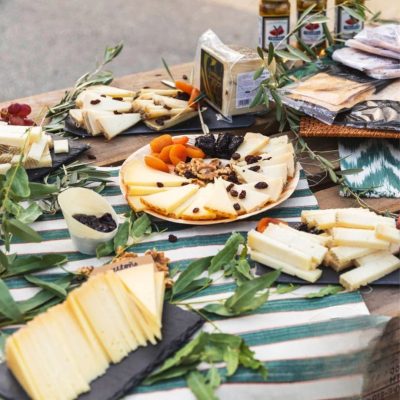
Goat cheese & pairing: the combination that never fails[/caption]
Which Spanish cheese to buy for a gourmet cheese board
A good board doesn’t need quantity. It needs judgment. The ideal is to combine contrasts and build a logical sequence. A mild cow’s milk or blended cheese can open the tasting, a semi-cured goat cheese brings tension and a cured sheep’s cheese closes with authority.
If you prefer a short but impeccable board, three cheeses are enough. In fact, it’s better to fall short and choose excellent pieces than to fill the table with mediocre options. In the gourmet universe, selection is worth more than accumulation.
It’s also wise to think about texture. A cheese that’s too dry next to another equally compact one can feel flat. In contrast, alternating a creamier piece with a firmer one gives the tasting rhythm. Neutral bread, some nuts and a subtle jam can accompany, but they should never eclipse the cheese.
For gifting, better prestige and recognizable origin
When cheese is bought as a gift, the criteria change. It’s not enough that it’s tasty. It must convey origin, authenticity and status. In that context, cheeses with a recognized designation or with clearly artisanal production have an obvious advantage. They speak of Spain with authority and turn the gift into a cultural, not just gastronomic, experience.
A good cured Manchego, an artisan sheep’s cheese with impeccable aging, or a small-production selection usually work very well. Here packaging, presentation and the product’s story matter as much as the flavor. The recipient should perceive they are receiving a chosen piece, not just another item.
For European customers buying premium Spanish products, this point is decisive. The gourmet gift wins when it combines sensory excellence with prestige of origin. And in that Spain has very few rivals.
Price doesn’t always tell the truth
With cheese, paying more can mean higher quality, but it doesn’t always mean you’ll like it more. A very aged, very cured or very singular cheese can be extraordinary and, at the same time, less enjoyable for someone who seeks something friendly. Gastronomic luxury is not in buying the most extreme, but the most appropriate.
Nor should you fall into the opposite error: only looking for the lowest price. A well-made Spanish cheese, with good milk and careful maturation, has real value. The difference is noticeable in the aroma, texture, slicing and persistence. It’s also noticeable on the table, because a premium cheese doesn’t need artifices to impress.
How to get it right according to your taste profile
If you enjoy mild flavors, look for cow’s milk or blended cheeses in fresh or semi-cured versions. If you like cheeses with depth, elegance and a long finish, semi-cured or cured sheep’s cheeses are your natural territory. If you value personality, freshness and a bolder touch, goat cheese will give you many joys.
If you frequently host appetizers, you’ll be interested in a cheese that’s easy to serve and understand, with a clean cut and broad acceptance. If you’re buying for a special dinner, it makes sense to raise the intensity and opt for a piece with more character. And if what you want is to build a serious gourmet pantry, the best strategy is to alternate styles so you don’t always repeat the same experience.
A specialty shop like Made in Spain Gourmet offers precisely that advantage: it doesn’t confront you with a generic catalog, but with a curation of authentic Spanish products, where each reference meets a clear standard of quality, origin and prestige.
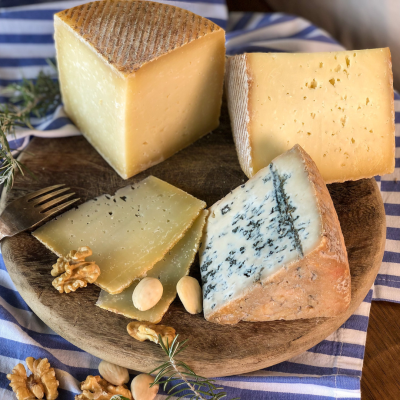
The best Spanish cheese is not just one
Searching for “the best” Spanish cheese usually leads to a poor answer. There is not a single best cheese, because there isn’t a single best occasion. There are extraordinary cheeses for a red wine, others for an elegant appetizer, others for cooking and others for gifting with real impact.
Smart purchasing doesn’t chase a famous label for its own sake. It pursues an experience. A cheese that fits your table, your palate and the moment you want to create. That’s the difference between buying cheese and choosing true Spanish gastronomy.
Next time you ask yourself which Spanish cheese to buy, think less about the category and more about the scene: a quiet dinner, a board for guests, a high-level gift or that small luxury of opening a good piece at the end of the day. When the cheese is excellent, the moment is too.
AUTHOR: Israel Romero, CEO of Made in Spain Gourmet.