What a Sherry Is and Why It's Unique

There are wines you drink and wines you understand. When someone asks what a Sherry is, they are actually stepping into one of Spain's great gastronomic traditions: a universe of aging, origin, and character unlike any other. Sherry is not a trend or a niche curiosity. It is one of the most noble, complex, and gastronomic wines in the world.
What a Sherry Is
A Sherry is a wine produced in the so-called Marco de Jerez, in Andalusia, under an absolutely singular production and aging system. Its identity arises from three pillars that make the difference: the white albariza soil, the Atlantic-influenced southern climate, and an aging method based on criaderas and solera that has given this category international prestige for centuries.
It is not a single style. Under the name Jerez coexist dry, sharp, and saline wines alongside broader, deep, silky, or intensely sweet ones. That range is precisely one of its greatest virtues. Few regions offer such a rich spectrum without losing coherence or sense of place.
To speak accurately, Sherry is tied to a historic appellation and artisanal know-how that demand time, patience, and judgment. That's why it holds a privileged place in any serious gourmet selection. It's not just premium Spanish wine. It's liquid culture.
Why Sherry Is Different from Other Wines
The first difference lies in biological and oxidative aging. Some Sherries age under a veil of flor, a natural layer of yeasts that protects the wine from direct contact with oxygen and imparts sharp, almond-like, and saline notes. Others evolve with oxidative aging, gaining body, depth, memories of dried fruits, fine wood, spices, and a much more enveloping texture.
The second major difference is the criaderas and solera system. Instead of aging each vintage separately, wines of different ages are blended in an organized way. The result doesn't seek the prominence of a single harvest but an admirable consistency and a house style that can only be achieved with experience. It's a model of artisanal excellence that defines Sherry and sets it apart from almost everything else.
Fortification also plays a role. In many cases, wine spirits are added to bring the wine to a certain strength and direct its aging. That technical detail, far from detracting from its elegance, is one of the keys to its complexity. Well-made Sherry doesn't feel heavy. It expands.
The Grapes and Origins That Explain Its Character
If you want to truly understand what a Sherry is, you must start with the Palomino grape. It is the main variety for the dry styles and the one that best expresses the albariza, that characteristic calcareous soil that retains moisture and contributes finesse. Palomino doesn't impress by aromatic exuberance, and that's precisely its greatness: it's a sober grape, perfect for allowing aging to build the wine.
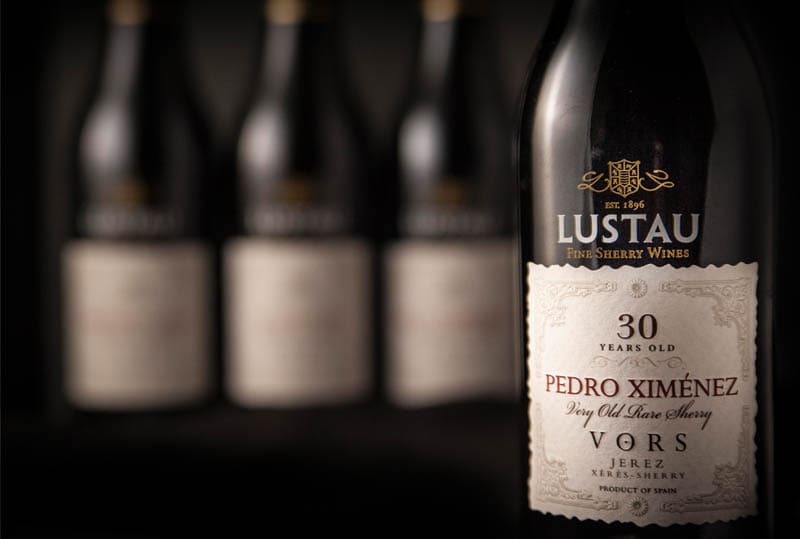
For the sweet styles, Pedro Ximénez and Moscatel stand out. The former yields dense, dark, seductive wines with notes of fig, raisin, coffee, and molasses. The latter offers a more floral and candy-like profile. Both are part of Sherry's heritage and show that the region masters not only elegant austerity but also well-understood opulence.
Origin matters a great deal. It's not enough to imitate the style. Authentic Sherry responds to a specific environment, with centuries of tradition and bodegas that have perfected a unique language. In premium gastronomy, that traceability is not a decorative detail. It is the foundation of its prestige.
Types of Sherry Worth Knowing
Fino is probably the clearest entry point into the world of dry Sherry. It's light, sharp, saline, and delicate, with a freshness that surprises anyone who still associates Sherry with heavy or overly sweet wine. Well served, it's one of the great aperitif wines on the planet.
Manzanilla shares a family with Fino but develops an even more piercing, maritime profile. Its personality makes it a magnificent match for shellfish, olives, fried almonds, or gourmet canned seafood. It is precision and pleasure in its purest state.
Amontillado begins its life under flor and then continues with oxidative aging. That double trajectory gives it a fascinating balance between freshness and depth. It has nerve, complexity, and a background of dried fruits that makes it extraordinarily gastronomic.
Oloroso forgoes biological aging and is aged oxidatively from the start. It is more structured, broader, and more intense. Here appear notes of walnut, wood, spices, clean leather, and an aromatic richness that calls for serious cooking, aged cheeses, or ambitious after-dinner moments.
Palo Cortado is the style that arouses the most fascination among enthusiasts and sommeliers. It combines, in a way, the aromatic finesse of an Amontillado with the mouthfeel of an Oloroso. It is not always easy to find in large quantities, and precisely for that reason it retains an aura of refined rarity.
At the sweet extreme are Pedro Ximénez and Moscatel, as well as creams and other blends. An important caveat: not all sweet Sherries are the same or suited to the same moment. Some are ideal for desserts; others shine with blue cheeses, foie gras, or even as a counterpoint in savory cooking. It depends on the sugar level, concentration, and balance.
How to Drink It to Truly Appreciate It
The biggest mistake with Sherry is treating it as a distant, ceremonial, or outdated category. In reality, it's one of the most versatile wines on the Spanish table. That said, it asks for some respect in service. Dry styles benefit from a cool temperature; the more complex and oxidative ones tolerate a bit more breadth. A suitable glass and a well-preserved bottle completely change the experience.
It's also worth abandoning prejudices. Fino and Manzanilla don't compete with a young white or a sparkling wine. They play in another league. Amontillado and Oloroso also don't make sense if you're looking only for primary fruity notes. Sherry demands attention and rewards it with layers of flavor that few wines offer.
Not everyone starts with the same style. Some enter through the saline freshness of a Manzanilla, others prefer the roundness of an Oloroso. The good news is that Sherry has an entry point for almost any curious gastronomic palate.
Pairings Where Sherry Truly Shines
Few categories are as grateful at the table. A Fino with
Iberian ham of the highest quality is an exemplary combination, almost a definition of Spanish elegance. Manzanilla pairs magnificently with
premium preserves, shellfish, light fried foods, and well-chosen appetizers. Amontillado has an extraordinary affinity with artichokes, mushrooms, poultry, and concentrated broths—something not many wines can claim.
Oloroso finds its natural ground with meats, stews, aged cheeses, and intense dishes. And Pedro Ximénez, when truly good, doesn't need many embellishments: a few shards of blue cheese, a dark chocolate dessert, or simply a carefully served glass are enough to understand its greatness.
Here lies one reason Sherry is so interesting to the European gourmet consumer: it elevates the table experience and allows you to build pairings with identity, not generic combinations. It's a wine with a story, with origin, and with a real ability to transform a meal into an occasion.
Why It Remains a Smart Purchase
Sherry has something rare in the premium segment: it offers very high complexity at prices that, in many cases, remain reasonable compared to other great regions of the world. That makes it an especially attractive purchase for those who value authenticity, prestige, and gastronomic pleasure without falling into empty luxury.
Moreover, it fits very well in a well-thought-out
gourmet pantry. Not only for its quality but because it covers many consumption moments: aperitif, meal, after-dinner, gastronomic gift, or a special bottle for demanding hosts. In a curated selection like Made in Spain Gourmet's, Sherry occupies a natural place: it represents Spanish tradition, craftsmanship, and excellence without artifice.
The best way to approach it is simple: choose a good bottle, serve it as it deserves, and give it space at the table. From there, the wine will do its work. And Sherry, when authentic, usually leaves a mark from the first sip.

AUTHOR: Israel Romero, CEO of Made in Spain Gourmet.