Jamón Ibérico: What Makes It Exceptional
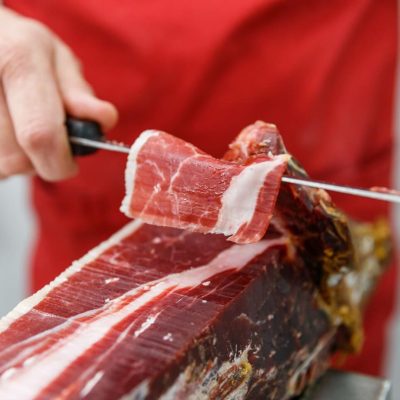
There are products you eat and products that represent a culture. Iberian ham belongs to the second category. It isn't just a highly prized cured piece: it is one of the most refined expressions of Spanish gastronomy, a symbol of craftsmanship, time and origin that continues to make a difference on any European table with gourmet aspirations.
Its value doesn't come from a trend or an empty story. It comes from a specific breed, a demanding rearing system, a diet that changes the sensory profile of the meat, and a patient curing process that admits no shortcuts. That's why, when chosen well, Iberian ham offers much more than flavor. It offers depth, elegance and a gastronomic experience recognizable from the first slice.
What Iberian ham really is
Calling any excellent cured ham "Iberian ham" would be a mistake. The authentic product comes from pigs of the Iberian breed or with the racial percentage allowed by regulations, and that genetic base matters. It matters for fat marbling, texture and that unctuousness that turns each slice into something delicate, lingering and complex.
From there, feeding and animal handling come into play. A cebo Iberian doesn't taste the same as a bellota one, and it shouldn't. Nor does a piece raised with more freedom in the dehesa respond the same on the palate as one from different systems. In top-quality Iberian ham, every nuance of the process is later perceived in the nose, on the tongue and in the final memory.
The difference between Iberian and Serrano
In the European market it is still common to compare them as if they were competing at the same level. That's not accurate. Jamón serrano is part of Spain's great heritage and can offer notable quality, but Iberian ham occupies another gastronomic category due to breed, fat structure and organoleptic complexity.
The big difference is in the intramuscular fat. In Iberian ham, that fat melts easily, coats the palate and carries deeper aromas. Serrano tends to be more linear, drier and less persistent. This doesn't mean one invalidates the other; they simply meet different expectations. When you seek a premium experience with character and refinement, Iberian ham is the natural choice.
[caption id="attachment_47966" align="aligncenter" width="400"]
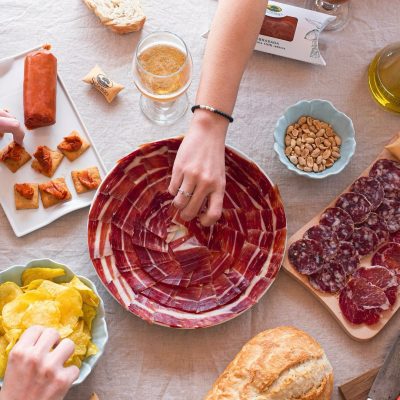
The luxury you slice by knife: discover the authentic Jamón Ibérico[/caption]
Bellota, cebo and cebo de campo: why not all are the same
This is where it's worth refining your criteria. The gourmet consumer should not buy just because the name says Iberian, but by the actual category of the piece. Bellota Iberian ham is the most prestigious because it comes from animals raised free-range and fed during the montanera on acorns and the natural resources of the dehesa. That environment and diet translate into a more aromatic fat, a silky texture and a hugely broad flavor.
Cebo de campo Iberian can also deliver an excellent result. The animal has more space and movement than in intensive cebo, and that is usually noticeable in the structure of the piece. Then there's cebo Iberian, which maintains the value of the breed but develops a less complex profile. That's not a defect. It simply corresponds to a different sensory level and price.
In a well-considered purchase, the right question isn't which is the most expensive, but which fits the occasion best. For a memorable gastronomic gift or an important celebration, bellota carries a weight that's hard to match. For more frequent consumption, a good cebo de campo can be an intelligent and very satisfying choice.
The decisive role of origin and curing
In the gourmet universe, origin is not a decorative detail. It's a guarantee of identity. Regions with a strong ham-making tradition have perfected over generations the know-how that today distinguishes the best pieces. The climate, altitude, the experience of the master ham-maker and cellar time build a result that no rushed production can imitate.
Curing is, in fact, one of the keys that separates a correct product from an outstanding one. A premium Iberian ham needs time for the salt to balance, for water to reduce naturally and for aromas to concentrate without losing elegance. If curing is too short, the result can be flat. If it is extended without judgment, it can become overly dry. Excellence lies in the right balance.
How to recognize a good Iberian ham
The purchase starts long before the first slice. A quality piece shows bright, fluid fat to the touch, never excessively stiff. The meat color ranges from intense reds to deeper tones, with fine marbling and visible infiltration that anticipate juiciness.
On the nose, a great Iberian should not hit you: it seduces. It should offer clean, persistent aromas, with cellar notes, nuts, scrubland and natural curing. In the mouth, the slice must melt, not remain tough or fibrous. And the flavor should evolve. First appears well-integrated salt, then umami depth and finally that long persistence that distinguishes truly gourmet pieces.
Pay attention to the slicing as well. An excellent ham badly sliced loses part of its value. The ideal slice is thin, glossy and balanced between lean and fat. If it's cut too thick, the product becomes heavy. If served too cold, the fat won't express its full potential.
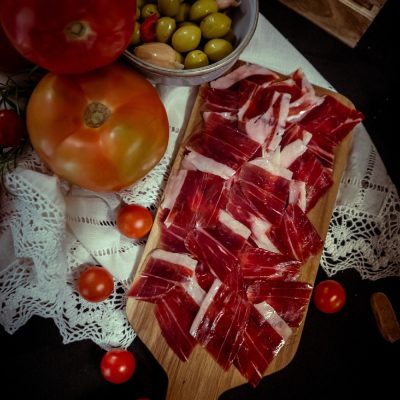
How to serve it so it measures up
Iberian ham doesn't need artifices. It needs respect. Service temperature is decisive: it should approach room temperature so the fat warms and the aroma opens. Taking it straight from a very cold environment is a quick way to mute its expressiveness.
It also shouldn't be paired with invasive flavors. Good bread, some understated crackers or a
well-chosen wine are enough to let it shine. In
appetizers, on platters and at celebrations, it performs with an authority rarely questioned. It elevates the table effortlessly and projects a very clear idea of hospitality with discernment.
For those hosting guests or looking for a gift with real prestige, few choices are as safe. Iberian ham conveys gastronomic knowledge, attention to detail and appreciation for products of genuine origin. It's not a superficial whim. It's a statement of quality.
When it's worth investing more
Not all occasions demand the same piece, and that's one of the smartest buying decisions. If the goal is daily consumption, a well-selected sliced format or an intermediate category can offer a lot of pleasure with a reasonable investment. If it's for a special date, a corporate gift or a family celebration, stepping up the level is noticeable and memorable.
Price differences in Iberian ham usually reflect real factors: racial purity, diet, rearing, curing time, piece size and the maker's prestige. Still, avoid a simplistic idea: paying more doesn't always guarantee that a piece will better suit the taste of the person who will enjoy it. Some palates prefer gentler profiles and others seek intensity and persistence. True luxury also consists of choosing precisely.
Iberian ham as a Spanish gourmet experience
In a
premium pantry, Iberian ham doesn't occupy the place of just another product. It's a category of its own. It brings together tradition, artisanal excellence and immediate pleasure with a naturalness few foods can match. That's why it remains one of Spain's great ambassadors on the most demanding tables in Europe.
At Made in Spain Gourmet, that demand is part of the selection: pieces with identity, traceability and the prestige expected of an authentic Spanish reference. Because when you choose Iberian ham, you're not just looking to eat well. You're looking to offer the best.
And that is the most honest measure for buying it: choose a piece that, when served, makes everything else on the table take a back seat.

AUTHOR: Israel Romero, CEO of Made in Spain Gourmet.