What’s the difference between sausages
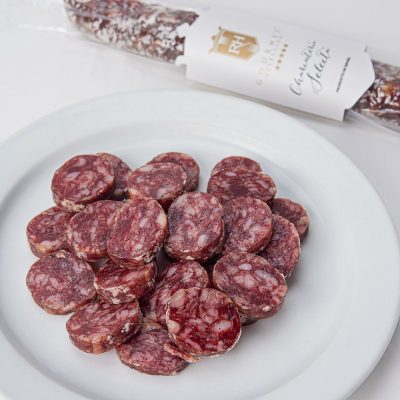
If you’ve ever wondered what the difference is between sausages when you see a platter of chorizo, salchichón, lomo, fuet or sobrasada, the answer isn’t only in the taste. It’s in the production, the cut of meat used, the seasoning, the curing and, of course, the origin. In Spanish gastronomy, talking about sausages is talking about tradition, artisanal craft and a very precise way of understanding quality.
Not all the products we usually group under the word “embutido” are exactly the same. That confusion is common, even among those who enjoy a good gourmet selection. That’s why it pays to refine your criteria. When you know the difference, you buy better, slice better, pair better and enjoy much more.
What’s the difference between sausages and other cured meats
The first distinction is basic but decisive. A sausage (embutido) is a meat product made from minced or chopped meat, seasoned and normally stuffed into a natural or artificial casing. Then, depending on the type, it may be cured, cooked, smoked or consumed fresh.
That means not every cured product is a sausage. Jamón ibérico (Iberian ham) or lomo embuchado, for example, are not made the same way as a chorizo or salchichón. Jamón comes from a whole leg that is salted and cured. Lomo embuchado also starts from a whole muscle, marinated and stuffed, but not from a minced mixture. In contrast, chorizo, salchichón, longaniza or fuet fully belong to the sausage logic.
The difference may seem technical, but it completely changes the gastronomic experience. A whole piece offers a clearer reading of the muscle and the curing. A sausage also expresses the maker’s hand in the grinding, the spices, the fat and the exact point of drying.
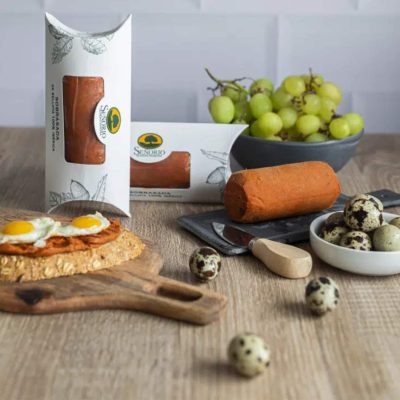
The main families of sausages
When someone asks what the difference is between sausages, they are usually comparing products that belong to different families. And that’s the key.
Cured sausages
These are the most valued in the Spanish gourmet world. They are made with minced meat, fat, salt and spices, stuffed into casings and then go through a controlled curing process. That maturation reduces moisture, concentrates flavor and defines texture.
Here we find unquestionable classics like chorizo, salchichón, fuet or certain dry longanizas. Quality depends on several factors: the origin of the meat, the lean-to-fat ratio, caliber, casing, curing time and the balance of seasoning. A good cured sausage doesn’t need artifices. It has a clean aroma, a firm yet pleasant texture and a persistent, elegant, recognizable flavor.
Cooked sausages
This group includes products that, after being stuffed, are subjected to cooking. The texture is more tender and juicy, and the aromatic profile tends to be less dry and milder. Mortadella, some cooked butifarras or certain traditional deli meats fall into this category.
They are not inferior by definition, but they are very different. They have another gastronomic intention. They work well in sandwiches, more informal platters or cold recipes, although in a gourmet context they usually require a more careful selection to keep the level.
Fresh sausages
These are sausages that are stuffed but neither cured nor cooked before sale, or are minimally processed. They need to be cooked and have a shorter shelf life. Fresh longaniza, fresh butifarra or certain regional sausages are good examples.
Here the raw material rules. Since there is no long curing to concentrate or round out the flavor, the quality of the meat, the seasoning and freshness are absolutely apparent from the first bite.
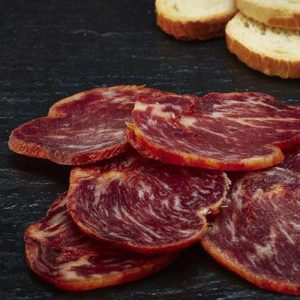
Spices also make a difference
Two sausages can look similar at first glance and yet tell opposite stories on the palate. One of the main reasons is the seasoning.
Chorizo is recognized by the prominence of paprika, sweet or hot, which gives it color, depth and an unmistakably Spanish character. Salchichón, on the other hand, leans more on black pepper and a finer aromatic profile, where well-integrated meat and fat take center stage. Fuet usually shows a narrower curing and a delicate touch, while sobrasada plays in a different league because of its spreadable texture and intense presence of paprika.
It’s not just a matter of taste. The spice defines regional identity, traditional production style and consumption customs. An excellent sausage does not mask the meat with seasoning. It accompanies it, elevates it and makes it more complex.
Meat and fat: where real quality begins
If there is one point that separates an ordinary sausage from a truly premium one, it is here. The quality of the meat and the fat changes everything. It’s not enough that the product is well cured or has an attractive label. A great sausage needs an impeccable base.
The animal’s provenance, its diet and the selection of cuts influence the final flavor far more than is usually imagined. In Spain, this demand reaches its highest expression in
Iberian products. Pork from the Iberian pig, with its fat infiltration and aromatic richness, offers a depth that’s hard to match. When that raw material is worked with knowledge and patience, the result belongs to another category.
Fat, furthermore, is not filler. It is structure, juiciness and fragrance. High-quality fat melts well in the mouth, doesn’t leave a heavy feeling and helps the sausage to have development. That’s why percentages, grinding and internal distribution are so important.
What’s the difference between sausages according to their curing
Curing deserves its own section because it completely changes the product. A young sausage is more tender, juicier and shows more primary notes. A more cured sausage gains intensity, firmness and persistence, but can lose some of that pleasant sensation if taken too far.
There is no single perfect point. It depends on the type of sausage, its caliber, the climate and the producer’s style. A fuet requires a different curing than a
cular chorizo. A thin longaniza doesn’t behave the same as a wider salchichón. That’s why artisanal criteria remain irreplaceable.
In a gourmet selection, well-executed curing is noticeable immediately. The piece doesn’t sweat excessively, doesn’t show aggressive aromas and maintains a balance between firmness and elegance. That harmony is the signature of great producers.
How to spot an excellent sausage when buying
You don’t need to be a charcutier to recognize quality, but you should look beyond the product name. The color should be natural and consistent with its production. The aroma, clean and enticing, never invasive or acidic. The texture should correspond to its type: neither excessively chewy nor senselessly soft.
It’s also worth paying attention to the simplicity of the ingredients. When the raw material is good, the product doesn’t need an endless list of additives. And, of course,
origin matters. In Spain, regions with a sausage-making tradition have perfected techniques over generations that aren’t improvised. That know-how translates into consistency, authenticity and international prestige.
For an appetizer board, a gastronomic gift or a true gourmet pantry, the smart choice is to combine profiles. An Iberian chorizo brings character, a fine salchichón brings balance, sobrasada adds personality and a lomo embuchado introduces a different piece, although technically it doesn’t play in the same category. That variety builds a richer and more Spanish experience.
Not all sausages are for the same use
This nuance is often forgotten. Some sausages are meant to be thinly sliced and served at room temperature. Others shine in cooking, on toast, in a spoon recipe or in a high-level sandwich. Choosing well also means knowing for what moment you are buying.
For an elegant aperitif, cured sausages with good complexity and clean slicing work better. For an informal gathering, a selected cooked sausage or a high-quality sobrasada can be very versatile. And for cooking, fresh sausages allow extraordinary depth if the base is good.
That is the true answer to what’s the difference between sausages: we’re not talking about a single homogeneous category, but about a universe of products with very different techniques, raw materials and results. Understanding it is the first step to buying with judgement and enjoying with gastronomic ambition.
At
Made in Spain Gourmet we are clear: an excellent sausage not only feeds, it represents a culture. And when origin, craftsmanship and selection are up to the task, each slice turns an ordinary table into a table with memory.
AUTHOR: Israel Romero, CEO of Made in Spain Gourmet.