Difference between cava and champagne
Ordering a glass of sparkling wine and saying “it doesn't matter, cava or champagne” is a fairly common mistake. At the table, in the glass and in prestige, the difference between cava and champagne exists, is noticeable and deserves to be understood. Not to complicate the moment, but to choose better and enjoy much more two great references in the world of sparkling wine.

Difference between cava and champagne: the key is origin
The first major difference between
cava and champagne is not in the bubbles, but in the place of birth. Champagne can only be called that if it comes from the Champagne region in France and complies with its appellation rules. It is a matter of protected origin, tradition and a tightly controlled method.
Cava, for its part, is a Spanish denomination of origin sparkling wine. Although many people immediately associate it with Catalonia, especially the Penedès, the D.O. Cava covers different authorized areas of Spain. Still, its historical soul and most recognized development are tied to the great Spanish winemaking tradition.
This point is not minor. When talking about gourmet products, origin is not a decorative detail. It's part of the value. Champagne represents a legendary French school. Cava represents consolidated Spanish excellence, with its own identity and a quality-price relationship that, in many cases, is frankly superior.
They are not the same grapes, and that changes the profile
Another decisive difference lies in grape varieties. Champagne is usually made with Chardonnay, Pinot Noir and Pinot Meunier. That combination gives, depending on the maison’s style and aging time, profiles ranging from citrusy and mineral to notes of brioche, butter, white fruit or dried fruit.
Traditional cava relies on very local varieties like
Macabeo, Xarel-lo and Parellada. In some cases it also includes Chardonnay or Pinot Noir, especially in certain styles and rosés, but the classic personality of cava is born from that Mediterranean trio. The result is often a fresher, more direct and very gastronomic sparkling wine, with well-integrated acidity and a clean expression of fruit, floral notes and herbal or aniseed background, depending on the winemaking.
It’s important to say: neither is automatically better than the other. They are different. If you seek mineral tension, autolytic complexity and a creamier profile, you may lean toward certain champagnes. If you prefer freshness, precision, Mediterranean character and table versatility, a great premium cava can give you exactly what you expect, or even more.
The method is similar, but the final style is not always the same
Both cava and champagne are made, in essence, with the traditional method. That is, the second fermentation occurs in the bottle. That is where the fine bubbles are born and where much of the aromatic complexity that distinguishes high-end sparkling wines from simpler industrially produced products begins.
That said, sharing a method does not mean offering the same result. Climate, soils, grapes, aging times and each producer’s philosophy all influence. Champagne works in a colder region, which favors profiles of marked acidity and great aging potential. Cava benefits from a more Mediterranean environment, with a different fruit ripeness and a more open expression in many cases.
There are also differences within each category. A young cava does not taste the same as a long-aged cava, just as a non-vintage champagne does not taste the same as a prestige cuvée. For this reason, comparing them as closed blocks can be useful for orientation, but insufficient to truly choose well.
[caption id="attachment_49069" align="aligncenter" width="400"]

Toast with Spain[/caption]
Aging, bubbles and mouthfeel
If there is something consumers notice immediately, it's texture. Champagne's bubbles are often described as very fine, persistent and creamy, especially in long-aged references. That contributes to that enveloping sensation that many enthusiasts associate with classic French luxury.
Top-quality cava can also offer an extremely fine and elegant bubble, with a delicate mousse and great depth. For years, part of the market made the mistake of undervaluing cava by focusing on entry-level ranges. But when you taste a well-made cava reserva or gran reserva, the conversation changes completely.
Aging on the lees is essential in both cases. The more time the wine spends in contact with the yeasts, the more notes of toasted bread, dried fruit, pastry and complexity appear. In cava, that evolution can coexist with a very attractive freshness for aperitifs and throughout the meal. In champagne, that complexity is often accompanied by a more severe or more linear structure, depending on the style.
Difference between cava and champagne in flavor and pairing
In the glass, the difference between cava and champagne translates into clear sensations. Champagne tends to offer a tenser, chalky and deeper profile, with acidity that can be extraordinary with oysters, caviar, very delicate shellfish or cuisine of classic French inspiration.
Cava, on the other hand, shines with spectacular naturalness on the Spanish and Mediterranean table. It works wonderfully with
Iberian ham, aged cheeses,
premium preserves, delicate fried dishes, rice, elegant tapas and high-end appetizers. It has immense gastronomic capacity because it combines freshness, cleanliness and character without imposing itself excessively.
This does not mean cava is not sophisticated. It means it is more versatile than many believe. A great cava can open a meal with
gourmet olives and almonds, accompany a charcuterie board and still be up to the task with fish, shellfish or even poultry dishes. That breadth makes it a particularly smart choice for those who enjoy entertaining at home with taste and good judgment.
Price also makes a difference
Let’s be clear here. Champagne tends to be more expensive. Not only because of production costs or the value of the land in the region, but because of a historical construction of international prestige that has turned its name into a global symbol of celebration.
Cava, even in its best expressions, usually offers more reasonable access to high quality. For the demanding consumer, this is hugely attractive. It allows you to drink excellent sparkling wines more often, buy better for a special dinner or elevate a gathering without blowing the budget.
In other words, if what you seek is label exclusivity and a French luxury imagery, champagne will continue to occupy that place. If what you look for is authenticity, traditional production, Spanish origin and a premium gastronomic level with an outstanding value-pleasure ratio, cava plays with formidable strength.
When to choose cava and when to choose champagne
It depends on the moment and the type of experience you want to build. For a very formal toast, a classic corporate gift or a dinner where protocol has weight, champagne can fit due to its immediate recognition. It carries symbolic value that works on its own.
But if the occasion revolves around gastronomic enjoyment, a well-set table and a careful selection of Spanish product, cava is often a more finely tuned decision. It dialogues better with many flavors from our gourmet pantry and conveys an idea of sophistication that is less obvious and, precisely for that reason, more interesting.
Choosing cava is not settling. It's knowing what you're serving. It's betting on a Spanish tradition of the highest quality that has reached an extraordinary technical and sensory level. For many European palates that value origin, traceability and craftsmanship, that criterion weighs more than the mere name of a famous denomination.
[caption id="attachment_32403" align="aligncenter" width="800"]
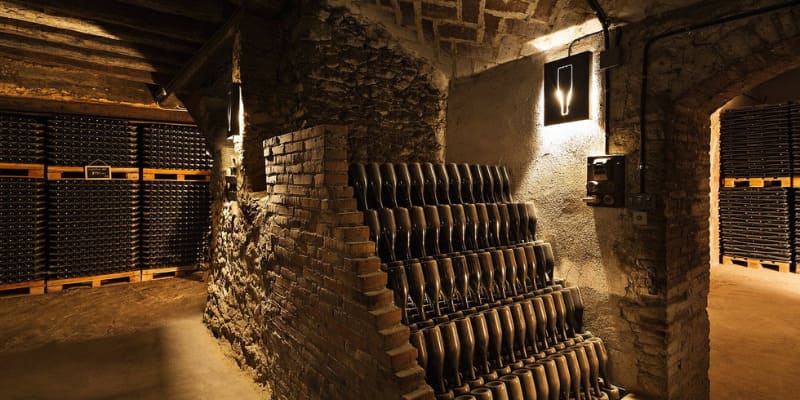
Vins El Cep: Premium Cavas that define the Penedès tradition since 1448[/caption]
So, which is better?
The correct answer is another question: better for what? If you are looking for an iconic reference marked by the history of French luxury, champagne has an indisputable place. If you want an elegant, gastronomic, premium sparkling wine deeply tied to Spanish excellence, cava does not compete from below: it competes head-to-head.
In fact, on many well-understood tables, cava is chosen not for price, but for style. Because it pairs better. Because it expresses a different landscape. Because its identity doesn't need to imitate anyone. That is the essential point to defend with confidence.
At Made in Spain Gourmet we know this well: when origin is cared for, production is impeccable and selection is demanding, cava stops being the alternative and becomes the choice of discernment. Next time you pour a glass, think less about the cliché and more about the experience you want to create. That's where true luxury begins.
AUTHOR: Israel Romero, CEO of Made in Spain Gourmet.