The Treasure of the Spanish Mediterranean
One of Spain’s most prized gourmet products: bluefin tuna. Between April and June is the almadraba season, coinciding with the animals’ passage from the Atlantic to the Mediterranean through the Strait of Gibraltar — a sustainable fishing method that dates back to Roman times. With a limited fishing quota, the almadrabas of
Barbate, Conil, Tarifa and Zahara help make wild bluefin tuna a relatively scarce delicacy.
[caption id="attachment_25390" align="aligncenter" width="1200"]
Bluefin tuna: treasure of the Spanish Mediterranean[/caption]
Bluefin tuna: treasure of the Spanish Mediterranean
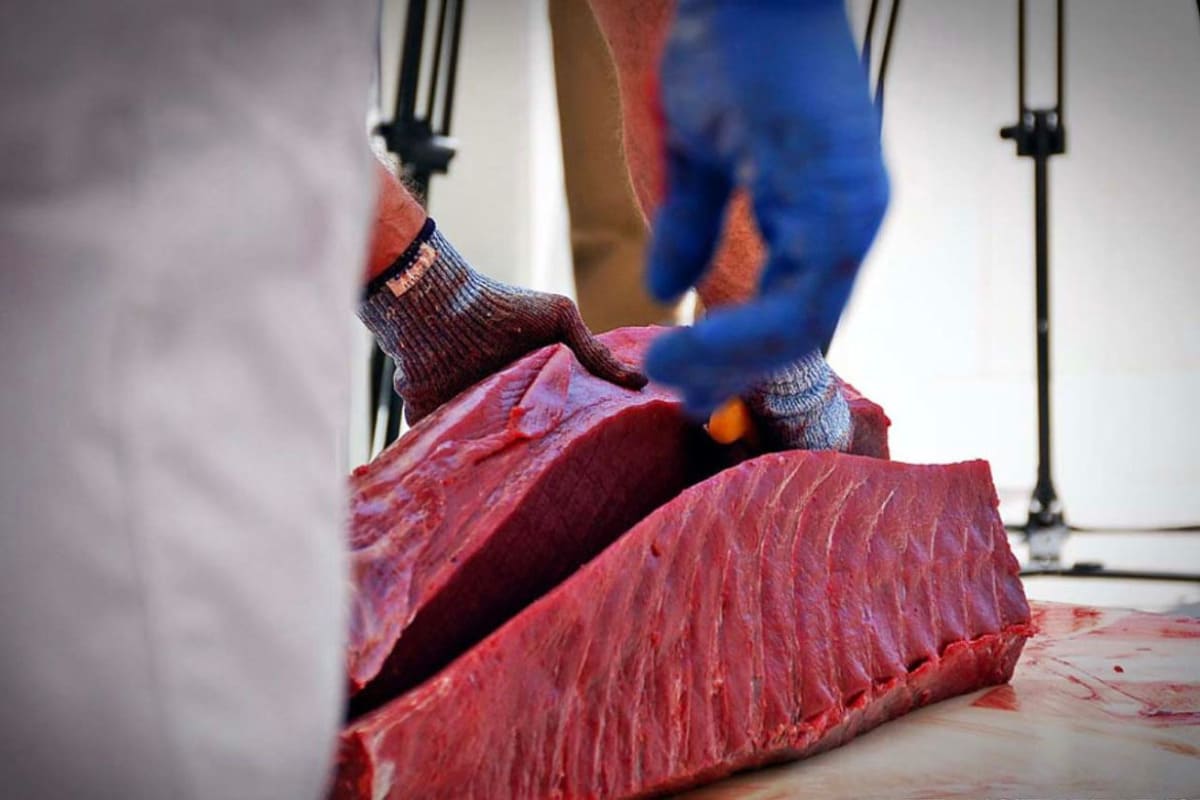
Once caught, the
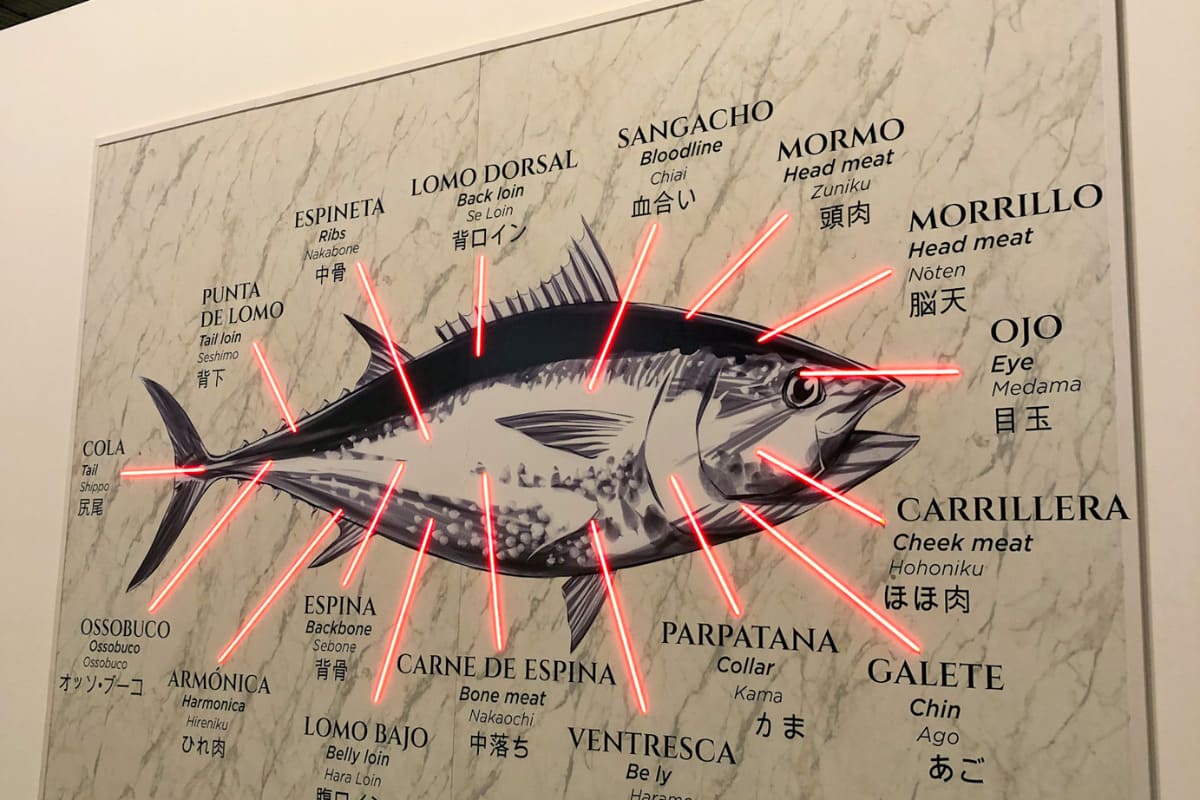
ronqueo begins — a name that comes from the sound the knife makes when it scrapes the backbone, reminiscent of someone snoring — a stage in which the head and tail are removed, the fish is eviscerated, and the loins are taken out. The ronqueadores, with surgical precision, separate the animal into 24 pieces, all different and each with its own texture, juiciness and flavor. None is wasted; all have gastronomic value, which is why we might say that
“bluefin tuna is like the Iberian pig of the sea.”
[caption id="attachment_25391" align="aligncenter" width="1200"]
Bluefin tuna: treasure of the Spanish Mediterranean[/caption]
These are the parts into which bluefin tuna is divided:
- Parpatana (behind the jaw): very juicy and prepared confit or as tartare.
- Morrillo (upper inner part of the head): great for salt-baking or grilling.
- Contramormo (also inside the head): cooked in sauce or grilled.
- Mormo (upper part of the head, between it and the fin): cooked with onions.
- Facera (equivalent to the cheek): cooked with onions.
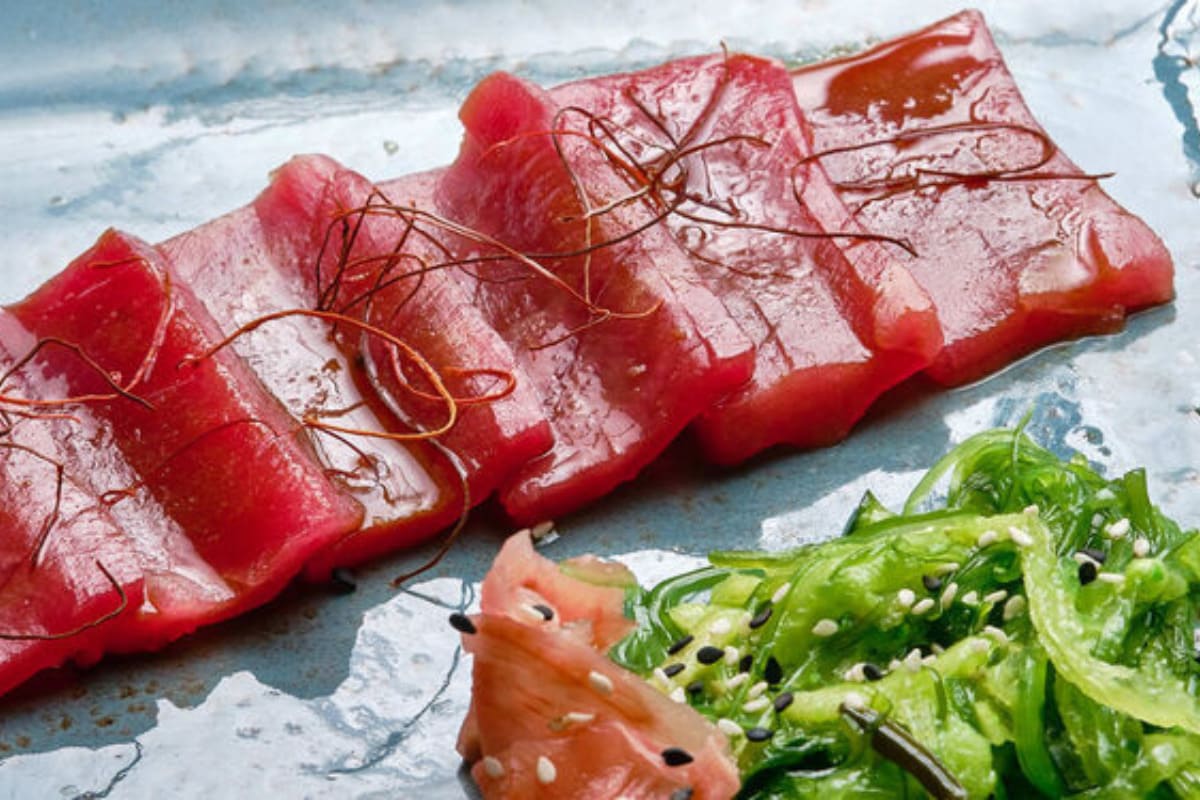
- Descargamento (inner part of the dark loin, a prized cut): the leanest piece and always used raw, as for sashimi.
- Tarantelo: comes from the muscular mass of the fish, a lean cut. It is taken from the lower part of the tuna, between the belly (ventresca) and the white tail. It has a triangular shape, a reddish color and less fat.
- Ventresca (belly, streaked with fat): grilled.
Made in Spain Gourmet has selected for you the most exquisite canned bluefin tuna from our country: the preserves from
El Ronqueo of Barbate and those from the
Conservera de Tarifa. Exceptional examples of what our Mediterranean Sea offers, and still largely unknown. Enjoy them at home with friends in a simple dinner that will surprise with its unique flavor — the flavor of Mediterranean bluefin tuna.
[caption id="attachment_25392" align="aligncenter" width="1200"]
Bluefin tuna: treasure of the Spanish Mediterranean[/caption]
Your favorites