During the montanera, when holm oaks and cork oaks adorn themselves with their best fruits, the Dehesa of Extremadura transforms into an unmatched setting, where nature sets the course of this unique livestock tradition. At Made in Spain Gourmet we tell you about the final fattening process of the 100% Iberian pig, the most prized in the world.
The Dehesa of Extremadura is the last natural Mediterranean forest and the cradle of the 100% acorn-fed Iberian pigs, where they are raised free-range
enjoying more than 3 hectares per animal and fed exclusively on acorns. This natural diet, together with artisanal production and the purity of the Iberian breed, guarantees the highest quality and the unmistakable flavor of
the finest acorn-fed Iberian products.
What is the montanera of the Iberian pig?
This wonderful period refers to the
final phase of rearing the Iberian pig, in which they live free-range enjoying more than 3 hectares of dehesa per animal, feeding exclusively on acorns, grass and other natural resources, without stress and completely happy in full freedom.
During this stage, each animal usually consumes between 2,000 and 3,000 acorns/day, which translates into a total of 600 kg by the end of the period. Of those
10–15 kg of acorns daily—of which they only use the pulp and discard the shell and cupule—about 3 kg of grass are added to refresh their palate and reduce the astringency of this fruit.
[caption id="attachment_32741" align="aligncenter" width="1200"]
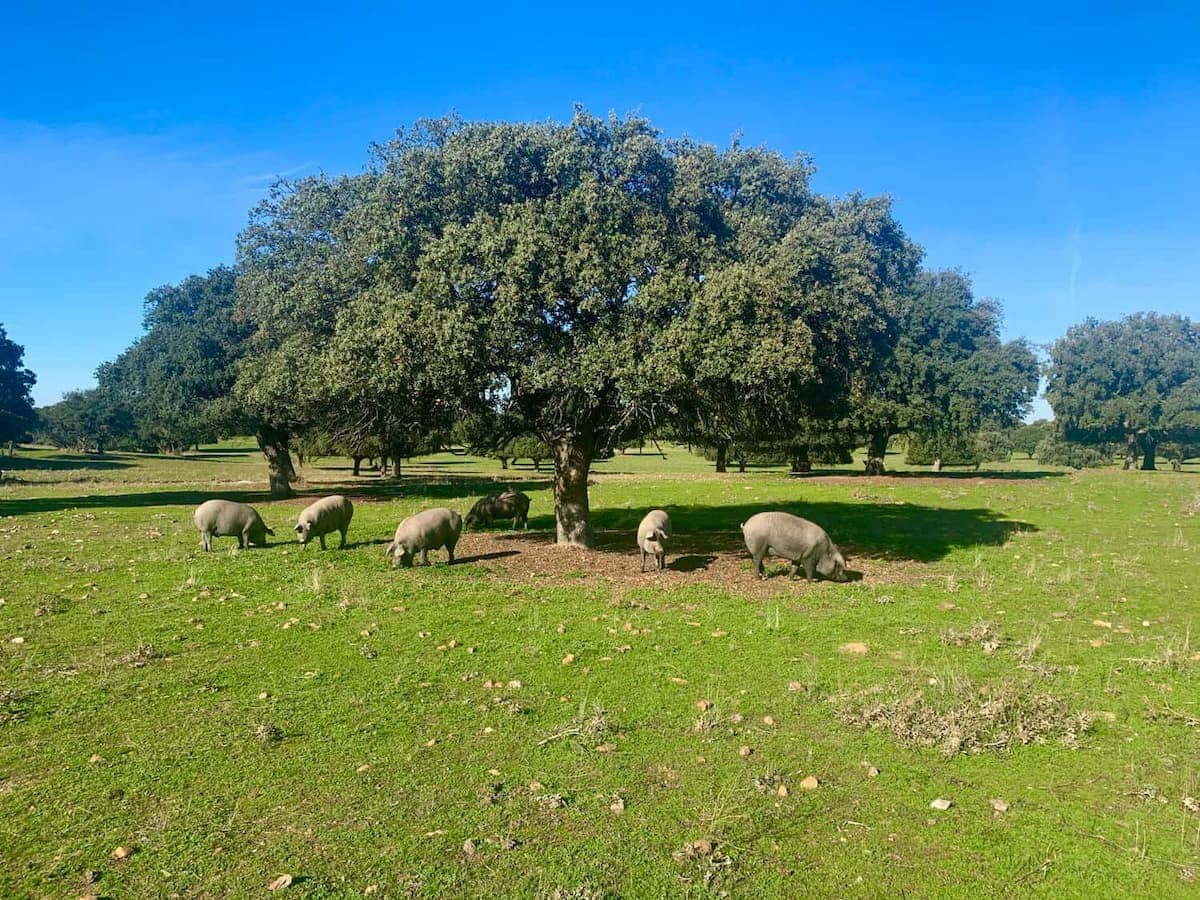
What an Iberian montanera is like in the Dehesa of Extremadura[/caption]
When does this stage begin?
The montanera
coincides with the acorn production on trees of the genus Quercus (holm oaks, cork oaks and gall oaks), which usually begins in October with the first rains and extends until late February in holm oak groves and until mid-March in cork oak groves. However, this timing is highly dependent on the weather (rain, wind, cold, etc.) and each year may differ from the previous one.
Within the Iberian quality standard, a
minimum period of 90 days consuming only acorns and natural pastures is required
for pigs to be considered acorn-fed. Outside this period, breeders provide a balanced diet based on natural feeds made mainly from cereals and legumes (such as barley, wheat, corn and soy).
How much does it influence the quality of Iberian ham?
This traditional extensive livestock system is a
necessary and indispensable requirement for the designation “acorn-fed”, also providing the distinctive flavor and aroma of the highest-quality 100% acorn-fed Iberian hams, which are among the crowning jewels of our gastronomy.
Added to this natural diet is the exercise these pigs get daily, traveling between 10–15 kilometers in search of water to hydrate. All of this affects the musculature of these animals, producing
very fibrous meat with unmatched juiciness thanks to its high degree of fat infiltration.
How was the montanera in Spain in 2024/2025?
The 2024–2025 montanera stood out for exceptional conditions that positively influenced the quality of Iberian products. The rains recorded in early September and October created an ideal environment in the dehesa, increasing the size and quality of the acorns and promoting the growth of fresh grass.
In the
DOP Dehesa de Extremadura, the campaign began with positive expectations, anticipating hams with balanced flavor, intense aroma and unmatched texture, a reflection of tradition and respect for the environment.
On the other hand, the
DOP Los Pedroches closed the campaign with "spectacular" results, highlighting an increase in the number of slaughterings and exceptional quality in its products.
Despite the favorable conditions, some producers observed that, although the quantity of acorns is lower compared to the previous campaign, the exceptional quality compensates for this decrease, creating very good expectations for the fattening and enjoyment of the Iberian pig in the dehesas.
In
Jabugo, during the 2024/2025 montanera, an abundance of acorns has been observed, which has allowed more pigs to be marked and has yielded positive results. The Protected Designation of Origin (DOP) Jabugo certified a total of 92,192 pieces in 2024, between hams and shoulders, representing an increase of 5% compared to the previous year. This rise in production is attributed to the favorable conditions during the montanera, which contributed to the quality and quantity of the region’s Iberian products.
The
montanera in Guijuelo, like in other Iberian pig producing regions, benefited from the season’s climatic conditions in 2024–2025. The September and October rains contributed to optimal grass growth and good acorn maturation, essential elements in the diet of Iberian pigs during this period.
In summary, the 2024–2025 montanera has been positive, with climatic conditions that favored the quality of Iberian products, although with variations in quantity and quality depending on the region.
Spain can guarantee, once again, that it is a privileged place to raise the 100% Iberian breed pig and, subsequently, to produce the best Iberian products the world can offer.
Ham, above all, each day fascinates and surprises new devotees. At
Made in Spain Gourmet you will only find the black label, the “Pata Negra,” unmatched—sorry, but Italian prosciutto plays in a different league.
Our recommendations
 AUTHOR: Israel Romero, CEO of Made in Spain Gourmet.