Buy Iberian ham online without failing
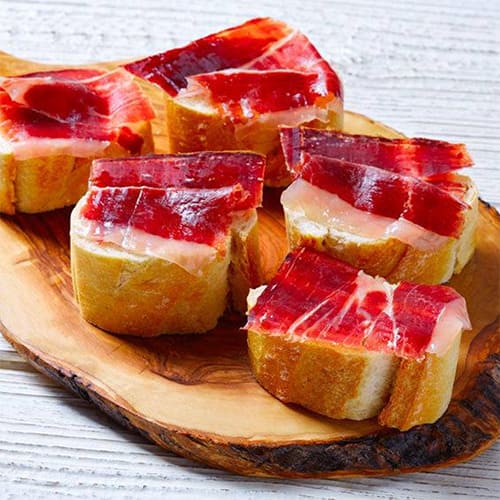
Some purchases allow improvisation and others do not. Buying Iberian ham online belongs, without question, to the second group. When you are looking for an iconic product of Spanish gastronomy, an appetizing photo or an eye-catching label is not enough. Much more is at stake: origin, breed, feeding, curing and, of course, the pleasure of bringing one of Spain’s great gourmet symbols to the table.
For those who live in Europe and want access to authentic Spanish product, the online channel offers a clear advantage: selection, convenience and access to references that rarely appear well represented in mainstream retail. But it also requires judgment. Not everything presented as Iberian lives up to the name. And in a category where every detail matters, knowing how to choose makes the difference between a correct purchase and a truly memorable experience.
What to look for when buying Iberian ham online
The first filter is the most important: the real origin of the product. Good Iberian ham is not defined only by sounding Spanish, but by coming from a specific tradition, with traceability and careful production. The Iberian category is linked to a singular raw material and to artisanal know‑how that Spain has perfected over generations. If a shop does not clearly communicate origin, type of cut or curing process, you should be wary.
Next comes the question of breed. This is where many purchases go wrong. Not all Iberian hams are the same, and that difference is not a minor nuance. Racial purity influences the marbling, the texture and the aromatic depth. A demanding consumer doesn’t just buy a ham: they buy a level of gastronomic excellence. That’s why it’s key to understand whether it’s a higher- or lower-purity Iberian and how that choice fits your budget and the occasion.
The animal’s diet also matters a great deal. A piece from animals fed during the montanera (the acorn-foraging season) is not the same as one from grain‑fed animals (cebo). Acorn feeding adds complexity, persistence and extraordinary silkiness. Properly raised grain‑fed ham can offer a very satisfying and more accessible experience. The key is not to pretend everything competes on the same plane, but to buy with correct expectations. If you’re looking for a high-end gourmet gift or a special occasion, acorn‑fed (bellota) clearly holds a prestigious position. If you want to enjoy good Spanish product more often, a quality grain‑fed (cebo) Iberian ham can be a very smart choice.
Buying Iberian ham online by format
One of the most common mistakes when buying Iberian ham online is choosing the format without thinking about real use. The whole leg has an indisputable cultural and gastronomic force. It makes an impression on the table, turns any gathering into an event and offers an experience closer to Spanish tradition. But it also requires space, the right tools and some skill with carving. It’s not the best option for everyone.
Sliced ham, on the other hand, responds very well to modern life and to the consumer who values practicality without renouncing quality. If it’s well sliced and well packaged, it retains much of its virtues and allows better control of consumption. For a small household, for a sophisticated gift or for someone who wants to enjoy the product without complications, it is usually the most convenient choice.
There is also a very interesting middle ground: ham centers or boneless pieces. They offer more yield than pre-sliced ham and less complexity than a whole leg. They are especially recommended for those who consume ham with some frequency and want a premium, practical and tidy solution.
Whole leg or sliced: it depends on the moment
If the goal is to dress up a celebration, impress guests or recreate the Spanish ritual of a well-served board, the whole leg makes sense. If what matters is opening, letting it come to temperature and enjoying it without delay, sliced wins for convenience. The best format is not the most showy, but the one that will actually be enjoyed at its best.
How to recognize a reliable shop
A specialist shop does not sell Iberian ham like someone selling another product in a catalogue without criteria. It presents it with context, authority and respect for the category. That difference is noticeable immediately. Good shops detail the type of ham, its origin, format, approximate weight and storage conditions. They talk about quality with precision, not vague terms.
Curatorial care of the assortment also matters. When a shop works only with premium Spanish gastronomy, trust reaches another level. It’s not about accumulating references, but selecting the right ones. For the buyer in the United States, this is decisive: they seek authenticity, consistency and the assurance that the product truly represents the best of Spain. In that field, a specialized offering like Made in Spain Gourmet is especially valuable because it understands that Iberian ham is not an isolated indulgence, but a central piece of a complete gastronomic culture.
Quality signals that do matter
Beyond marketing, there are concrete signs. A good ecommerce cares for product information and presentation. It explains what’s necessary without confusing. It also works with packaging and logistics designed to protect a premium food. For a delicate product, shipping is not a technical detail: it’s part of the final quality.
The price of Iberian ham: when it’s justified
Excellent Iberian ham is not competing to be cheap. It competes to be extraordinary. Behind a great piece there is time, breeding, selection and a slow production that doesn’t allow shortcuts. That’s why when the price seems suspiciously low, the reasonable reaction is not to celebrate a bargain but to ask what has been cut.
This doesn’t mean only the most expensive reference is worth buying. It means each level must pay for a product truth. An honest grain‑fed (cebo) Iberian, well cured and well presented, can give a lot of pleasure at a sensible price. A premium acorn‑fed (bellota) Iberian, for its part, justifies its cost when origin, fat quality, aroma and persistence are up to the mark. The demanding buyer does not look for the lowest price. They look for the best balance of authenticity, quality and experience.
What to expect when it arrives at home
When the ham arrives, it deserves the treatment it merits. If it comes pre-sliced, ideally let the packet reach room temperature before opening. That small gesture completely changes the product’s expression: the fat becomes glossy, the aroma unfolds and the texture reaches its point. Serving it cold wastes part of its gastronomic value.
If it’s a whole leg, storage and carving greatly condition the experience. It should be kept in an appropriate place and opened carefully, respecting the surface and making good use of each area. The maza, the babilla and the tip offer distinct profiles. That is part of its greatness: it is not a flat product but a living, changing piece, full of nuances.
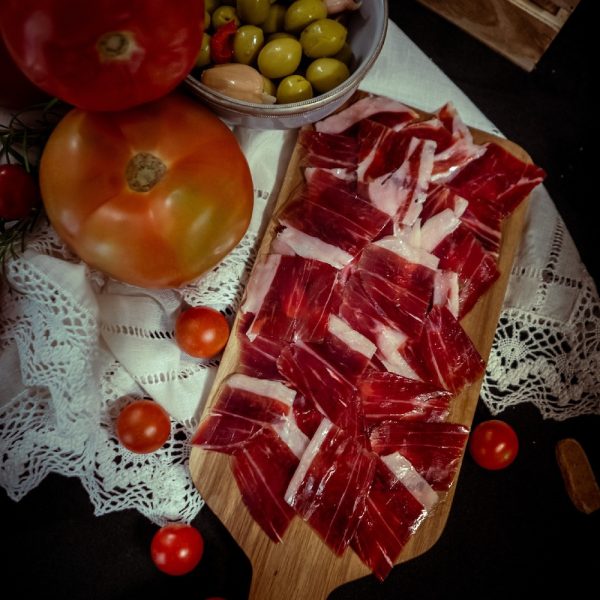
What to pair with a good Iberian ham
Great Iberian ham needs no artifices. It asks for company, yes, but never noise. Good bread, some picos (crisp breadsticks), a well‑chosen glass of Spanish wine or a fine cava are more than enough. It also works wonderfully as an elegant appetizer with cured cheese, select olives or premium preserves. The important thing is to keep the focus where it should be: on the intensity and nobility of the product.
Here is another relevant nuance for online buying. If the shop offers a well‑selected Spanish gourmet universe, it’s much easier to build a complete experience. You’re not just buying ham. You are buying a way to receive, to celebrate and to bring the prestige of the Spanish table home.
Buying Iberian ham online with gourmet judgment
The best purchase is not always the most expensive nor the most famous. It is the one that answers what you are really looking for: authenticity, pleasure, trust and a product that lives up to its name. Buying Iberian ham online successfully requires looking beyond the commercial pitch and valuing the essentials: Spanish origin, expert selection, appropriate format and a shop that understands the category.
Those who get it right with that criterion do not just buy an exceptional food. They give themselves a ritual, a tradition and one of Spain’s great everyday luxuries. And that kind of purchase, when done well, is noticeable from the first slice.
AUTHOR: Israel Romero, CEO of Made in Spain Gourmet.